Across industries, leaders are figuring out what AI value means for their companies. The transition can be challenging, especially from a governance and leadership perspective.
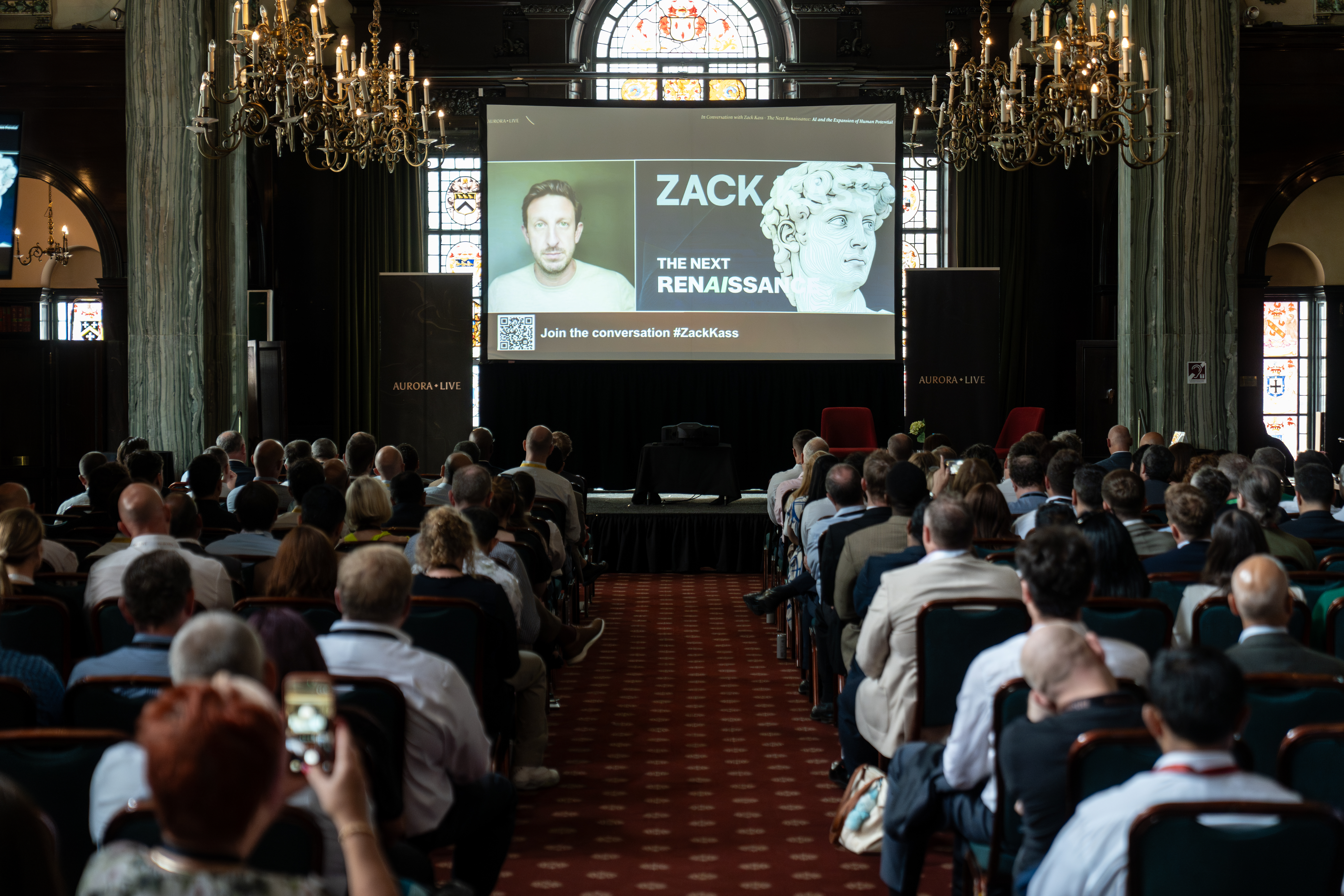
In this article, we highlight the key takeaways from our In Conversation With session with Zack Kass, former Head of Go-To-Market at OpenAI, to help you and your teams navigate that transition more smoothly. From setting the right goals for AI success to hiring for the right skills to building trust within your organisation, Zack shares actionable insights drawing from 15 years of AI expertise.
1. AI is becoming infrastructure
Many organisations still view AI as another software application or tool. Zack argues that this viewpoint is narrow and incorrect. Advancements in AI have transformed the technology into infrastructure, like electricity or literacy before it. He adds that AI will soon fade into the background, becoming an invisible part of everyday life and work. The focus moves from front-end tools like ChatGPT to what the underlying systems enable.
“We turned our cutting‑edge research into a magical AOL Instant Messenger. People were going to start talking about AI as a product when AI is so much more. It's infrastructure.”
As AI becomes more ubiquitous and increasingly embedded into the systems around us, competitive advantage lies with organisations that know how to derive value from it. Rather than measuring success by AI adoption or activity, success will be determined by how well organisations can integrate intelligence into products, workflows, and decisions to improve business outcomes.
“Right now, we are still asking how much of the app to keep using when we haven't considered the infrastructure at all. Humans can improve their work because of the infrastructure and technology we build in the background."
2. Replace vanity metrics with valuable business goals
To fully realise AI as infrastructure, setting the right business goals is crucial. Zack mentions that organisations and leaders are focusing on vanity-led metrics when it comes to AI success. As these metrics are not rooted in long-term value, businesses are losing money, and employees are left sceptical.
“The obsession right now is with token consumption, application adoption, or agent building – all three of those metrics are wrong. They are vanity metrics that are inflating cost and scaring people.”
Leadership teams are also getting pulled in different directions due to the overwhelming number of AI solutions on the market and ways to adopt them. Zack stresses that leaders should focus on a few business outcomes and work backwards from there.
“They are making people's heads spin. Organisations are getting pulled apart in different directions because of the adoption of tools. What you need to do is pick a few things that are really going to be important.”
AI-related business goals need to be driven by aspects of the organisation where the technology doesn’t require constant human intervention. They also must be driven by the right people who take full ownership of the AI journey.
3. Adoption hinges on trust and transparency
For teams to be comfortable with AI, leaders must treat AI integration as a trust-building exercise, starting from the C-level. This exercise will take time, requiring alignment and explainability before intelligence can be successfully embedded. Zack adds that trust can’t be built with one town hall announcement or a memo about "our AI strategy."
Top management members are the stewards of shaping the AI narrative, and Zack says there’s a long way to go. He acknowledges that this effort requires courage and that responsibility falls on leaders in industries, communities, and governments.
“The CEO has to be willing to get on board and say this is going to change a lot, and we need to start talking about it."
People need to see that AI will make their jobs better, not replace them. Resistance will arise if AI is framed as a cost-cutting measure. Find the lowest risk point in your team's workflow and let AI solve it visibly. When teams see that AI elevates their contributions, they'll lean in.
A lot of this comes down to seeing to believe. Once people see how simple the technology is to use, leaders will find it easier to navigate and guide the usage of that technology once it becomes more accessible. Zack reflects on the turning point of ChatGPT once he and his team figured out they needed to demonstrate the benefits of the technology better.
“We launched GPT 3.5 in May 2022, but not many people used it. The API documentation didn't explain to people well enough what they can do with this. We needed to show how good the technology is.”
4. When intelligence is abundant, hire for mastery
When asked about the employable skills in the AI world, Zack emphasises deep mastery and the ability to learn things quickly. Technical skills are no longer as important as AI becomes more abundant and accessible.
“Intelligence has gone from exceptionally expensive to widely available in six years. It’s the best evidence that I have that we are building another accessible commodity.”
According to Zack, a consistent ability to master difficult things trumps mastering specific tools or technical skills. The ability to learn the next thing is more important than the thing you happen to know today.
“What I hired for early at OpenAI was mastery. Are you exceptional at an instrument, or a sport, or can you speak multiple languages? Have you shown the ability to excel somewhere?”
5. Define your automation boundary
The rise of agents has made intelligence more human-like and capable. This development presents new a responsibility to business leaders: what should be automated and what should remain deeply human? According to Zack, automation boundaries vary and depend on several factors.
“If you could automate everything in your life, where would you stop? The automation boundary is deeply personal, depending on economic, religious, and cultural factors.”
In a business context, Zack advises using AI to eliminate the vicious friction that slows us down, from searching for information and summarising documents to other repetitive work that adds little value. Draw boundaries with AI when it comes to helping us learn, exercise judgment, build relationships, and find meaning; the things that make work and life rich.
“You are a steward of a world that we're going to pass to the next generation. Are we going to be proud of what we've built?”
Zack Kass’ Insights on Agentic AI
- Agentic AI is a Siri that works: “Agentic AI is a machine that can execute tasks and goals on our behalf across browser, data lake, and web app. It is, in other words, a Siri that works.”
- Agentic AI implementation is more talk, less action: “Everyone is talking about it, but it's not clear at all who is doing it, and it turns out very few.”
- Agents will force a rebuild of the Internet for machines: “We are rebuilding the fabric of the Internet, not an HTML browsable Internet designed for our eyes, but a txt xml internet designed for our agents. The optimal state of the internet is one built for our agents.”
- Many user journeys to popular websites will disappear: “As soon as an agent can reliably retrieve my account statement and send it to my accountant, I'm never going to go to my bank's website again. Many of you are going to navigate to a website for the last time in the next three years.”
- Agents will disintermediate weak brands and expose who is a commodity: “You have to figure out as a business leader where you sit on your customer's preference stack very quickly, because as soon as an agent can disintermediate you, that is going to be a rude awakening for many companies.”
- Agentic AI will quietly strip away choice: “Abundance brought us optionality, and optionality at some point is breaking our brains. Agents offer to take a bunch of choices off our plate.”
*Zack Kass was a keynote speaker at a recent virtual In Conversation With session hosted by Aurora Live. The insights have been edited for length and clarity. For more insights from Zack, subscribe to his newsletter here.