When and where
Date
Location
Virtual
Tags
Leadership & Strategy ManufacturingShare with friends
About this session
What if the manufacturing networks that delivered competitive advantage for decades are no longer designed for the world we are entering?
Geopolitical shifts, changing trade policies, economic pressures and the rise of regional markets are forcing manufacturers to rethink where they source, where they produce and how their global networks are designed.
The question is no longer simply global or regional. It is: where does global scale still create advantage, where does regionalisation make better strategic sense, and how can leaders balance efficiency with flexibility and competitiveness?
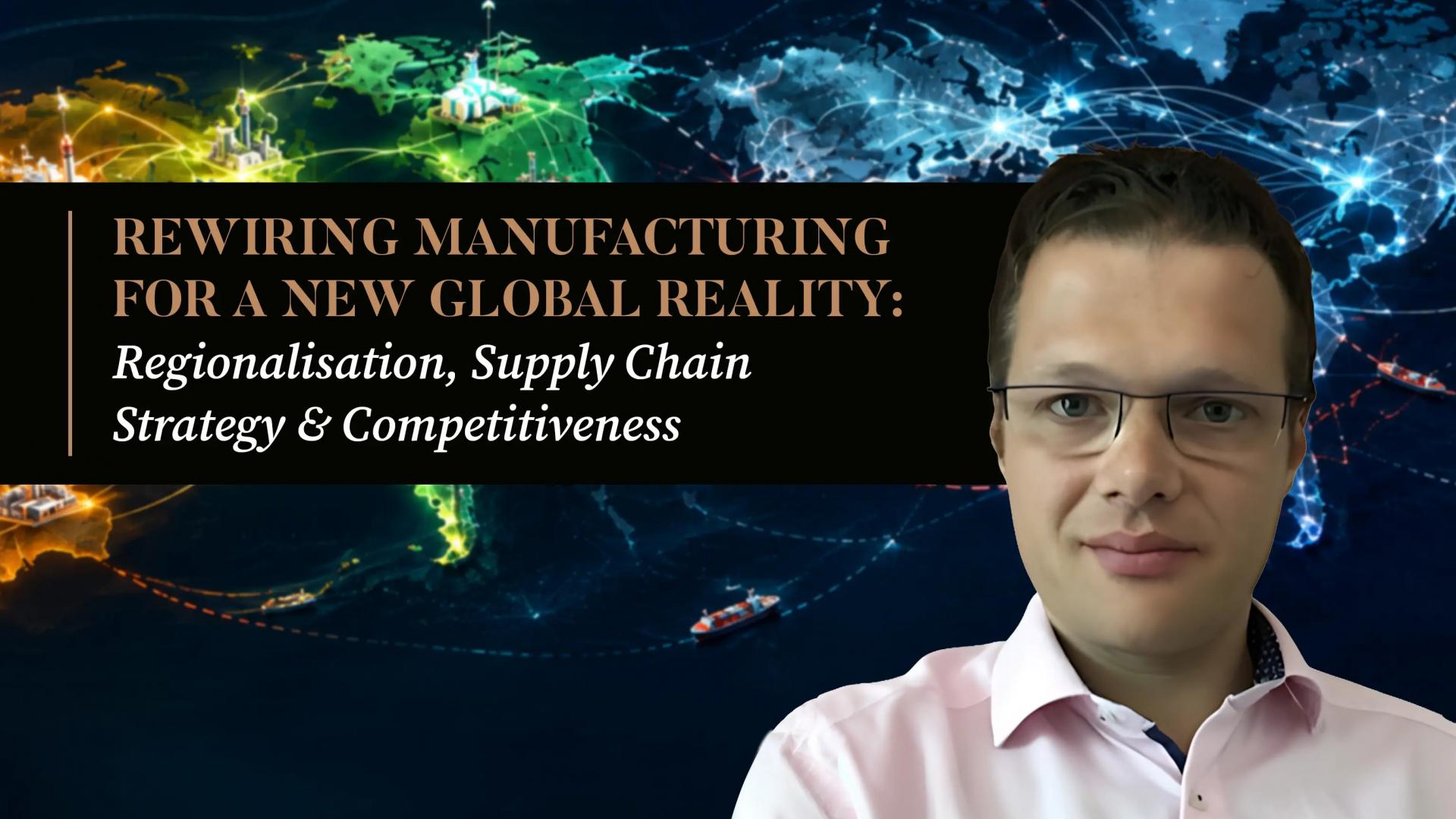
Drawing on his experience at Bayer, Marc Weissenfeld, SVP Global Head of Supply Chain Consumer Health will explore how manufacturing leaders can rethink sourcing, supplier and network strategies for a more fragmented global landscape and how AI and decision intelligence can help navigate increasingly complex trade-offs.
Looking ahead, the challenge is not to choose between globalisation and regionalisation, but to build the right network, in the right markets, with the right capabilities to compete as the world changes.
Discussion Points:
• Global or regional: Where does global scale still create competitive advantage?
• Rethinking the network: How are geopolitics, tariffs and economic shifts changing where manufacturers source and produce?
• Nearshoring or friendshoring: Where does regionalisation genuinely create value — and where does it add cost?
• Efficiency vs. flexibility: How can manufacturers balance scale, agility and competitiveness?
• AI as a strategic advantage: How can AI and decision intelligence reshape manufacturing network decisions?
• The next decade: What will the competitive manufacturing network of the future look like?